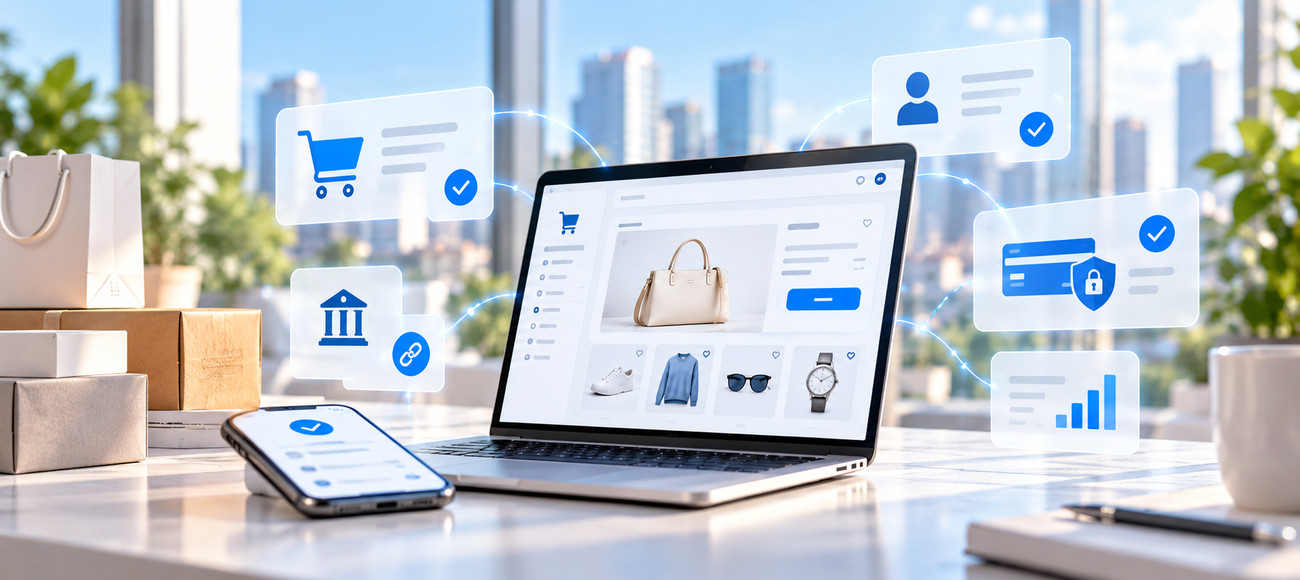
E-commerce has become part of our everyday lives. Its origins go back more than 40 years, which makes it older than the World Wide Web. Since then, a lot has changed, and companies in every industry are constantly looking for new ways to improve their online presence and offer customers the best possible shopping experience.
Key milestones in the rise of e-commerce include the invention of the World Wide Web with HTML and HTTP around 1989, the launch of online payment services such as PayPal in 1998 and the release of WordPress in 2003. Today, open banking is the next driver of change, with the potential to take online retail a significant step further. With the customer’s consent, it allows e-commerce companies to use bank data in their sales process.
This creates new opportunities for tailored offers, seamless payments and a better customer experience.
What Is Open Banking?
Open banking was introduced in the EU through PSD2, which has applied since 2018. It is based on the idea that bank customers should be in control of their own data and can choose to share it with other providers in order to receive better products and services. With the customer’s consent, licensed providers can access financial data such as account balances, transaction history and payment information. This data can then be used to offer tailored services.
Would you like to learn more about open banking? Then read here.
The Benefits of Open Banking in E-Commerce
We all know the feeling: you’ve filled your shopping cart, you go to checkout, and then the disappointment sets in. Your preferred payment method isn’t offered. Online shops need to avoid these moments, because they regularly prevent purchases from being completed.
In German-speaking countries, purchase on invoice (Kauf auf Rechnung) remains one of the most popular payment methods. However, many merchants don’t offer it because they fear payment defaults. This can lead to painful lost sales, as the customer has already reached checkout with a full cart.
A Better Customer Experience with Open Banking
With the customer’s consent, open banking allows online shops to assess a customer’s ability to pay quickly and reliably. Based on this, they can offer suitable payment methods, including purchase on invoice, with a lower risk of payment default. A shopping experience that matches the customer’s needs increases customer satisfaction and builds long-term customer loyalty.
Higher Checkout Conversion with Instant Payments
Open banking also enables seamless payments. With payment initiation services, customers pay directly from their bank account and authorise the payment in their banking app. They no longer need to enter credit or debit card details manually, which speeds up checkout considerably. Less friction at checkout means higher conversion rates and a better shopping experience.
New Business Opportunities in E-Commerce
Open banking also opens up new business opportunities beyond selling goods. Together with licensed partners, online shops can offer financing options for larger purchases, or tailored insurance and warranty packages. These additional services can increase revenue potential and attract new customers.
Challenges and Security
Open banking offers many benefits, but there are also challenges and security aspects to consider. The most important is the protection of customer data. Access to bank account data is only possible through providers licensed under PSD2, who must meet strict security requirements. E-commerce companies, in turn, must ensure that they handle financial data confidentially and securely. This includes secure encryption, compliance with data protection regulations and strong access controls.
Companies must also obtain the customer’s consent before any financial data is accessed. Transparency and clear communication are essential to building trust. Customers should know exactly how their data will be used and what benefits they gain from sharing it.
It therefore makes sense to work with open banking specialists who handle the financial data and data protection management. This allows companies to benefit from open banking cost-effectively, without having to build the necessary infrastructure or meet the regulatory requirements themselves.
Open Banking in E-Commerce with the FINcredible Check
With the FINcredible Check, e-commerce companies can assess their customers’ creditworthiness based on up-to-date bank data, with the customer’s explicit consent. This allows them to adjust payment methods to the individual customer and reduce payment defaults.
Conclusion
Open banking is a largely untapped opportunity for e-commerce. With the customer’s consent, companies can use bank data to offer suitable payment methods, seamless payments and a better shopping experience. This can lead to higher customer satisfaction, higher conversion rates and new business opportunities. At the same time, companies must take data security and customer privacy seriously in order to earn their customers’ trust. E-commerce companies that make use of open banking can gain a competitive advantage and strengthen their market position.
Do you have any questions?
Contact FINcredible at contact@fincredible.at or via our contact form.
To stay up to date, follow us on LinkedIn and Youtube or subscribe to our newsletter!